
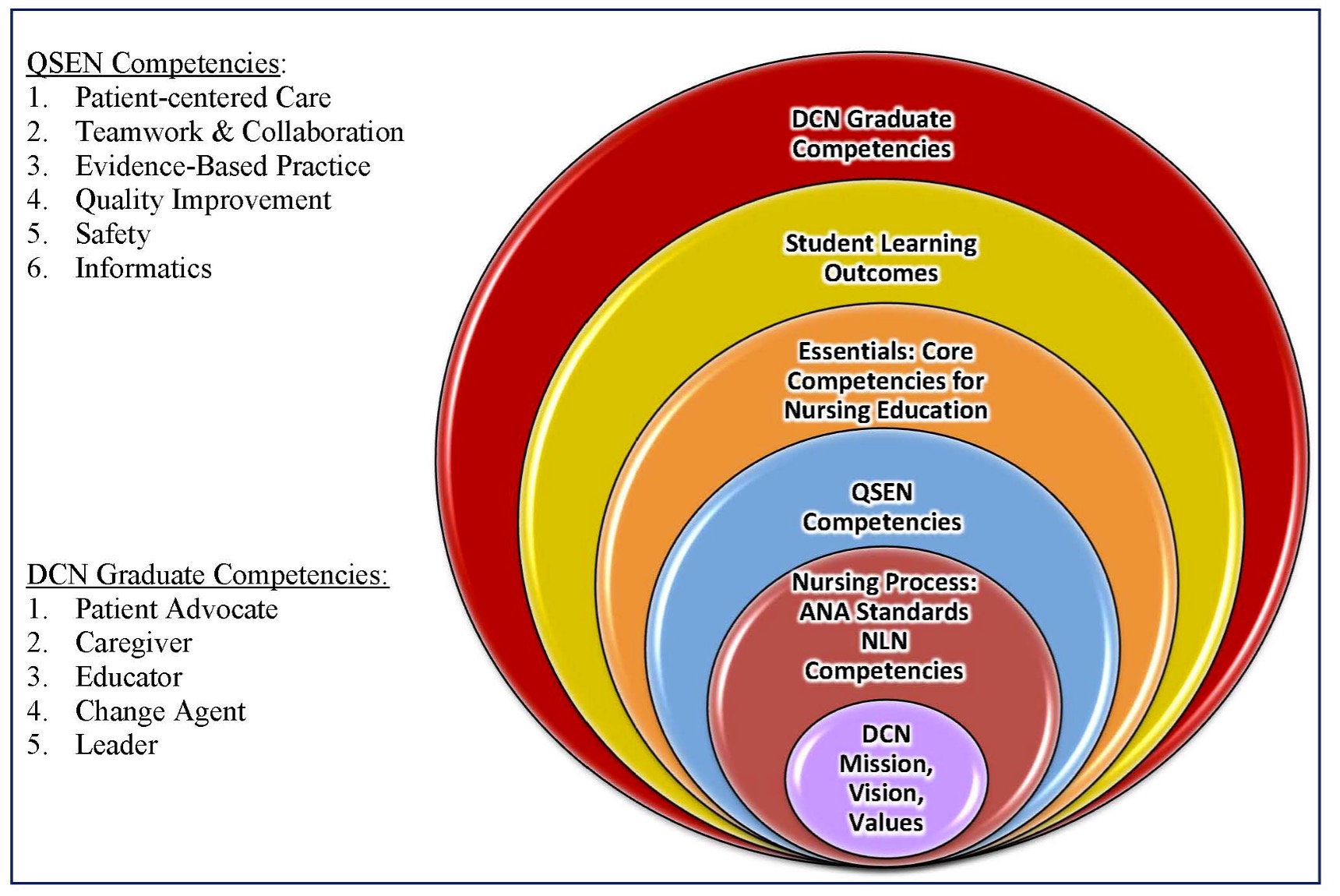
Denver College of Nursing (DCN) faculty have developed and implemented a framework that integrates the four theoretical concepts of nursing, person, environment, and wellness into each program’s curriculum by incorporating the Quality and Safety Education for Nurses (QSEN) competencies into program student learning outcomes, course objectives, and content. The QSEN competencies include patient centered care, teamwork & collaboration, evidence-based practice, quality improvement, safety, and informatics (2020). The nursing process, framed by the American Nurses Association (ANA) Standards of Practice and Standards of Professional Performance (ANA, 2021), along with the National League for Nursing (NLN) Competencies for Nursing Education (NLN, 2022), is also utilized throughout each program.
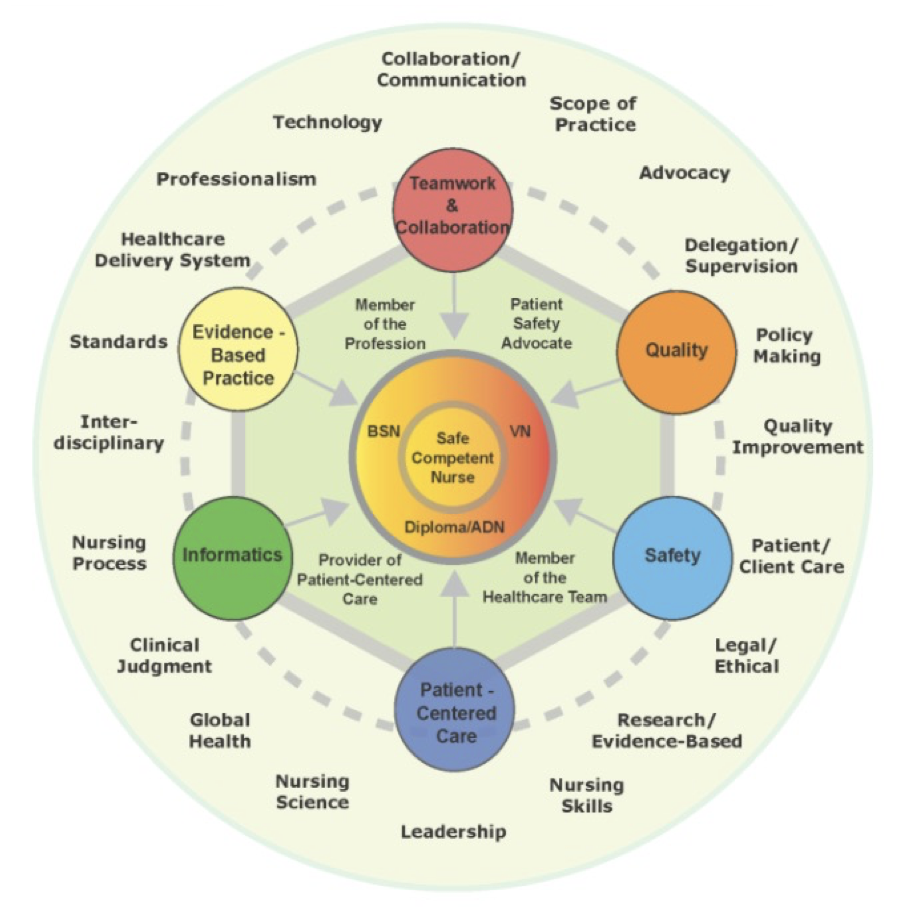
Additionally, each program’s Student Learning Outcomes (SLOs) incorporate accreditation standards into their respective curricula. Specifically, the Associate Degree in Nursing program is guided by the ANA Standards and the NLN Competencies; the Bachelor of Science in Nursing program and the Master of Science in Nursing program are guided by the Essentials: Core Competencies for Professional Nursing Education (AACN, 2021). The goal of each program at DCN is to facilitate student achievement of the DCN graduate competencies of patient advocate, caregiver, educator, change agent, and leader (Figure 1). The Denver College of Nursing-Houston Campus follows the same conceptual framework in addition to the Differentiated Essential Competencies of Graduates of Texas Nursing Programs (Figure 2).
Figure 1: Denver College of Nursing Conceptual Framework
References:
American Association of Colleges of Nursing (2021). The Essentials: Core competencies for professional nursing education. American Association of Colleges of Nursing.
American Nurses Association (2021). Nursing: Scope and standards of practice, (3rd Edition). American Nurses Association.
National League for Nursing [NLN], (2022). Nursing education competencies. https://www.nln.org/education/nursing-education-competencies
Quality and Safety Education for Nurses [QSEN], (2020). Quality and Safety Education for Nurses https://qsen.org/
Figure 2: Differentiated Essential Competencies of Graduates of Texas Nursing Programs
References:
Differentiated Essential Competencies of Graduates of Texas Nursing Programs (2021) Differentiated Essential Competencies of Graduates of Texas Nursing Programs Evidenced by Knowledge, Clinical Judgments, and Behaviors. https://www.bon.texas.gov/pdfs/publication_pdfs/Differentiated%20Essential%20Competencies%202021.pdf
Goals
The following goals are integral to the mission of Denver College of Nursing:
- To offer sound degree programs.
- To develop each student’s individual and professional growth, including written and interpersonal communication, critical thinking, and problem-solving competencies.
- To minimize economic disadvantages as a barrier to postsecondary education by providing financial aid services and by accepting students without regard to age, sex, religion, race, physical challenges, or economic or social background.
- To attract and retain qualified faculty who are effective in the classroom and familiar with appropriate current medical and/or technical practices.
- To maintain a dynamic organization that is responsible and responsive to its constituencies.
- To develop in students a professional attitude and an awareness of contemporary career practices through exposure to pragmatic course content and to faculty currently engaged in enterprise.
- To assist graduates in finding positions for which they are trained.
- To select faculty with professional experience who have the ability to motivate and develop students.
- To promote self-discipline and motivation so that students may enjoy success on the job and in society.